

eter Attia interviews Anna Lembke who is the Chief of the Stanford Addiction Medicine Dual Diagnosis Clinic and author of Dopamine Nation: Finding Balance in the Age of Indulgence. In this episode, Anna dives deep into the biochemistry and neurobiology of addiction, exploring the critical role of dopamine and the prefrontal cortex. She shares her framework for diagnosing and treating addiction, providing real-world examples involving alcohol, gambling, cannabis, social media, and more.
Listen to the full podcast on Youtube.

The suffering of people who are addicted to gaming and social media, the struggle of their families, and the need for screening, prevention, early intervention and treatment are highlighted in this interview with Dr Daniela Vecchio on Reuters.
Read More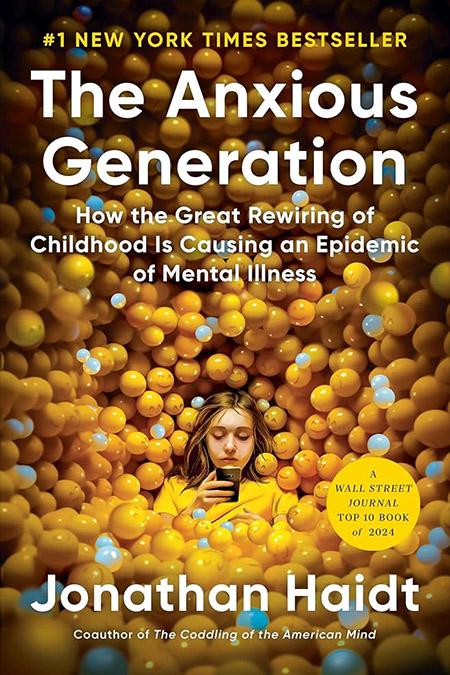
In The Anxious Generation, social psychologist Jonathan Haidt presents more than a dozen mechanisms by which this “great rewiring of childhood” has interfered with children’s social and neurological development, covering everything from sleep deprivation to attention fragmentation, addiction, loneliness, social contagion, social comparison and perfectionism.
Read More
A brief 4-week intervention using screen time trackers showed that reducing social media use (SMU, experimental group) yielded significant improvements in appearance and weight esteem in distressed youth with heavy SMU, whereas unrestricted access to social media (control group) did not.
Read MoreWe greatly appreciate your feedback on this website and would like to know what information you found useful and what services you would like to see next. Please take a couple of minutes to let us know.
survey


